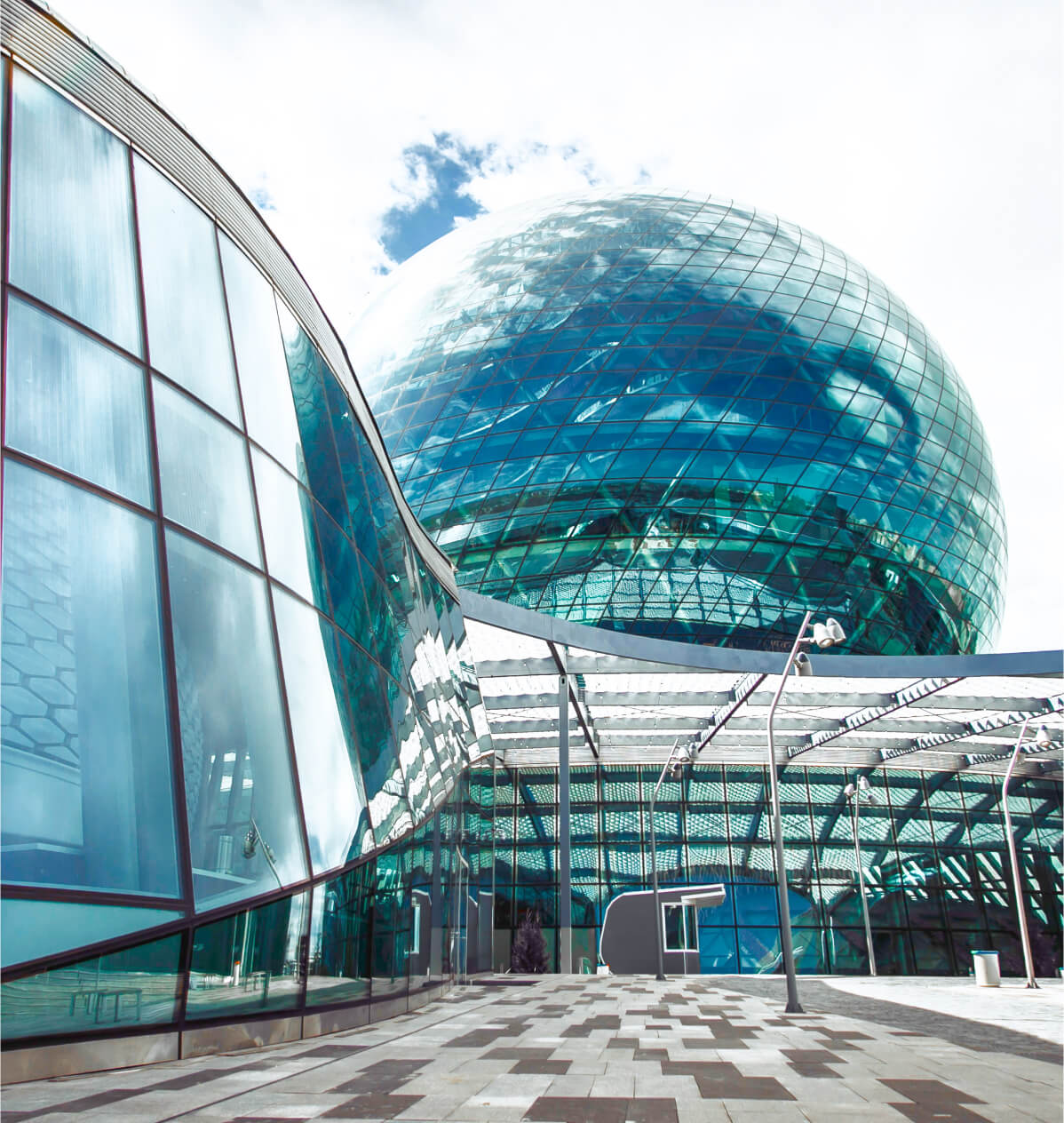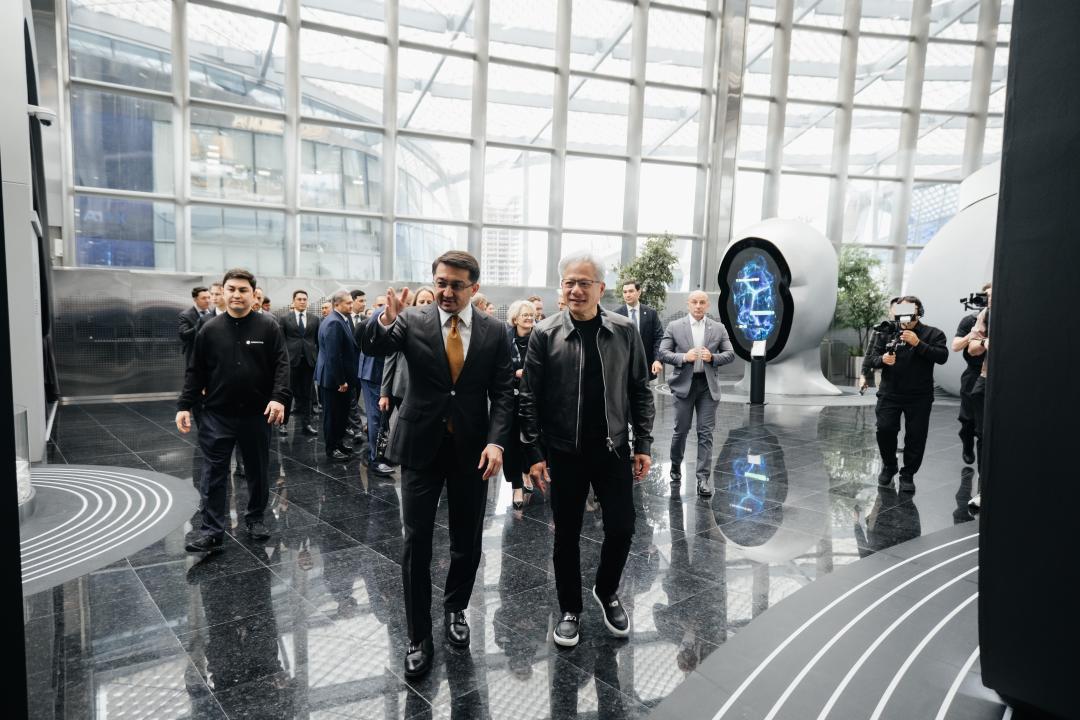


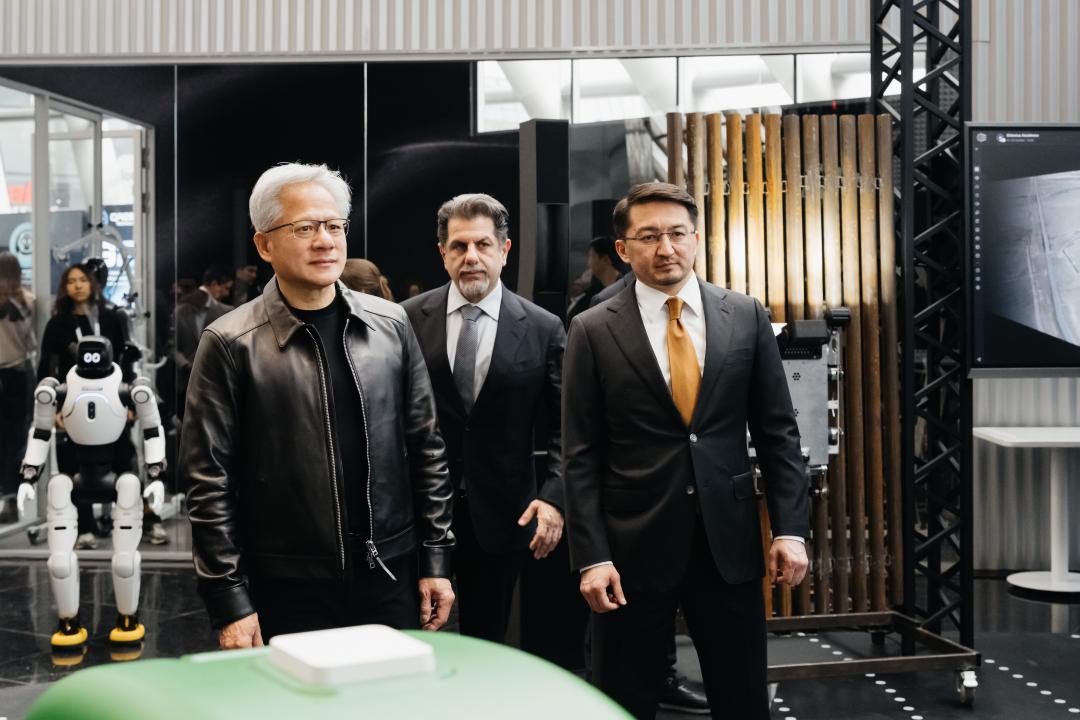
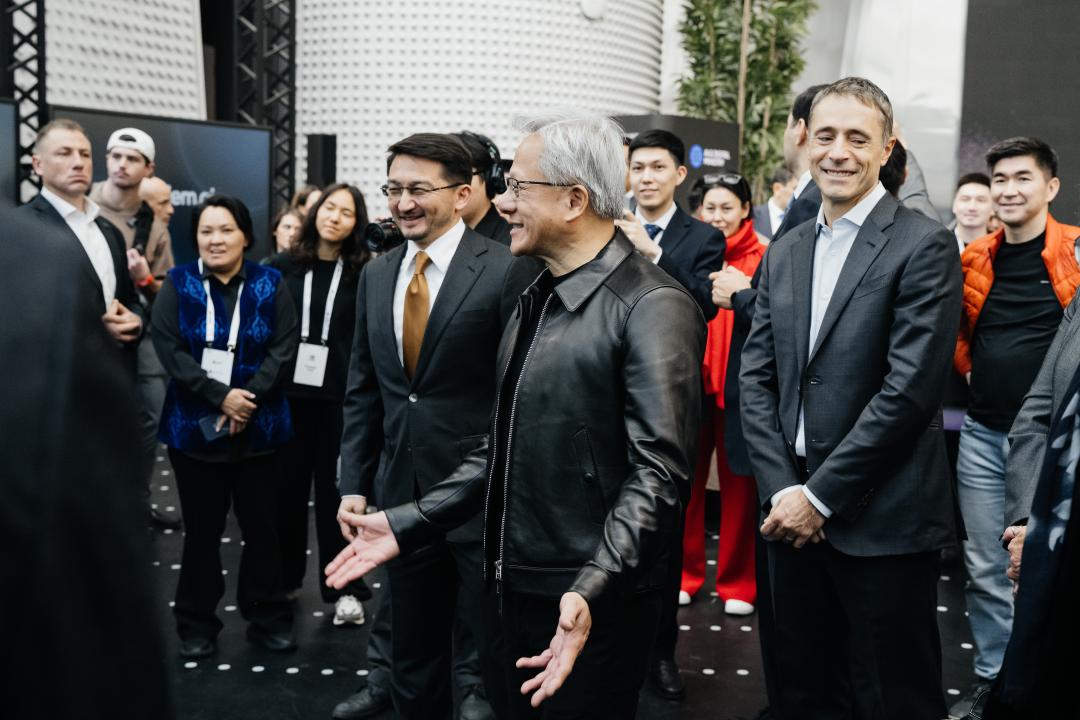


On October 23, 2026, NVIDIA founder and CEO Jensen Huang visited the alem.ai International Artificial Intelligence Center in Astana for the first time. During the visit, he was introduced to Kazakhstan’s strategy to become a global Physical AI hub, built on three key pillars: a favorable institutional environment, modern infrastructure, and human capital development.
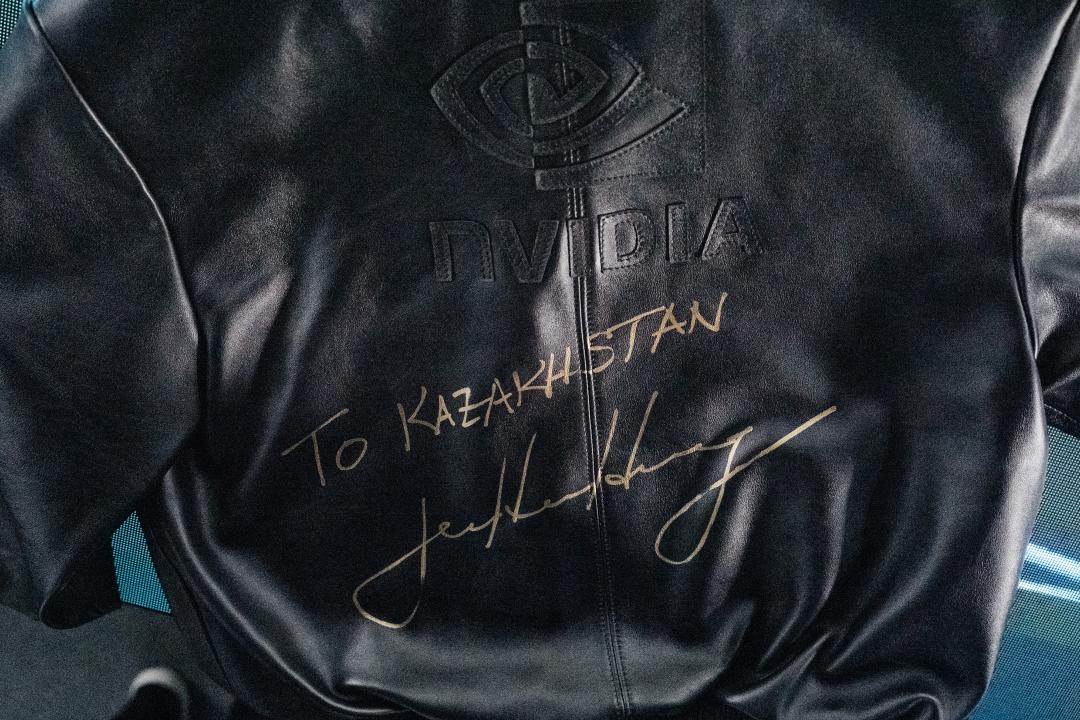
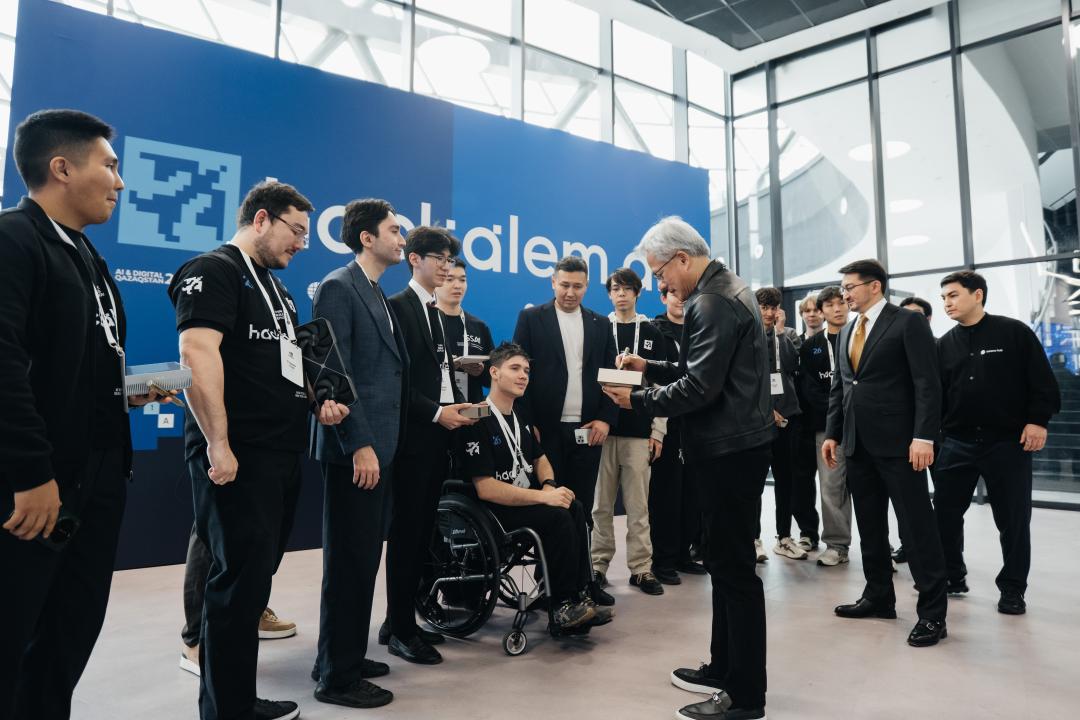
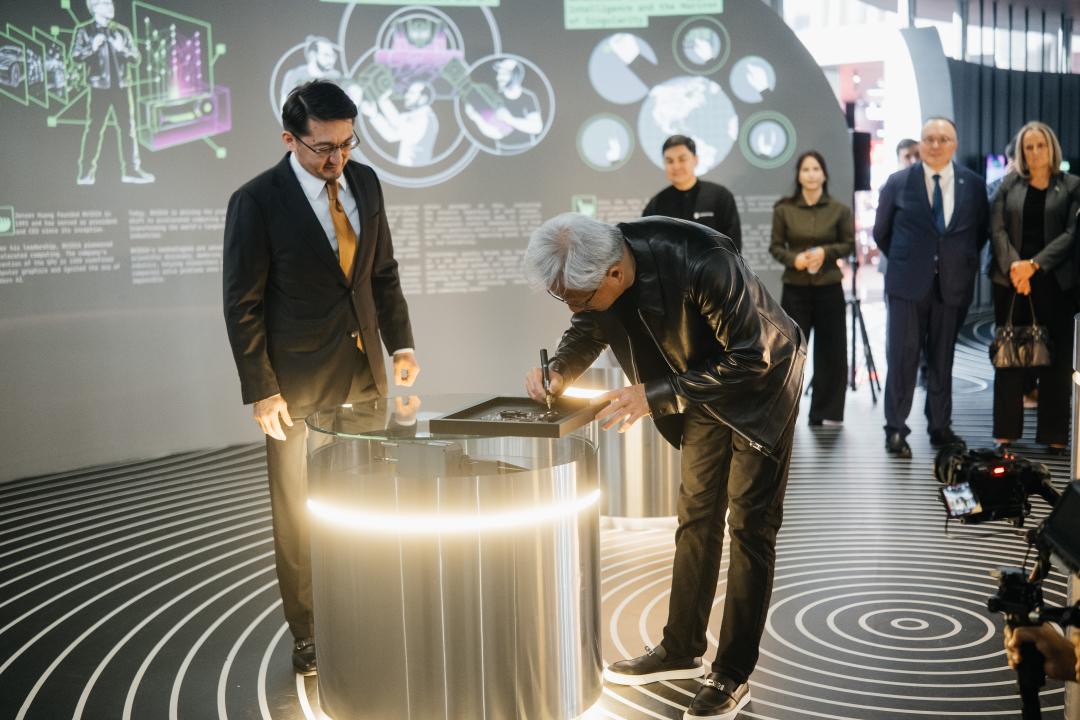
During his visit, Jensen Huang explored the Museum of Singularity, which showcases the history and evolution of artificial intelligence, from its earliest concepts to modern neural networks and generative AI, as well as its impact on the future of humanity. A highlight of the tour was the NVIDIA founder signing a museum exhibit — a 1998 NVIDIA RIVA TNT graphics card, representing one of the company’s early milestones in graphics technology. The signed exhibit will become part of the museum’s permanent collection. Jensen Huang also visited AI Cinema, the world’s first cinema dedicated to screening AI-generated content.
“Kazakhstan is the first country I’ve visited where the President declared AI development a national priority. Artificial intelligence will help your country rise to a new level, expand people’s opportunities, and enable companies to compete and scale in the global market. Artificial intelligence will transform your society,” noted Jensen Huang, founder and CEO of NVIDIA.
The visit also included a demonstration of the Self-Service Center, a next-generation space where users can independently access government, business, and other services. At the heart of the center is alem.gpt, an intelligent AI-powered assistant that enables users to access services through natural language interactions. The solution is powered by AI models running on Alem.Cloud GPU clusters equipped with NVIDIA H200 graphics processing units. The demonstration also showcased eGov Mobile capabilities, including digital documents and the eGov QR service, as well as the integration of government and banking systems through a digital mortgage application.
“Today, artificial intelligence is transforming not only technology but also the balance of power in the global economy. Kazakhstan intends to take its place among the countries shaping the future of this industry. Our advantage lies in the combination of energy resources, a well-developed industrial sector, and a growing pool of talented engineers and developers. Together with technology leaders such as NVIDIA, we see an opportunity to transform Kazakhstan into a global hub for Physical AI, where intelligent systems and robotics can be developed, tested, and deployed in real industrial environments. Our ambition is not merely to develop AI infrastructure, but to create technologies and companies capable of competing globally,” said Zhaslan Madiyev, Deputy Prime Minister and Minister of Artificial Intelligence and Digital Development of the Republic of Kazakhstan.
Jensen Huang’s visit opens new opportunities for the development of Kazakhstan’s AI ecosystem and its integration into the global technology industry. Of particular importance is creating the conditions for developing world-class technologies domestically and expanding international opportunities for Kazakhstani professionals and companies.
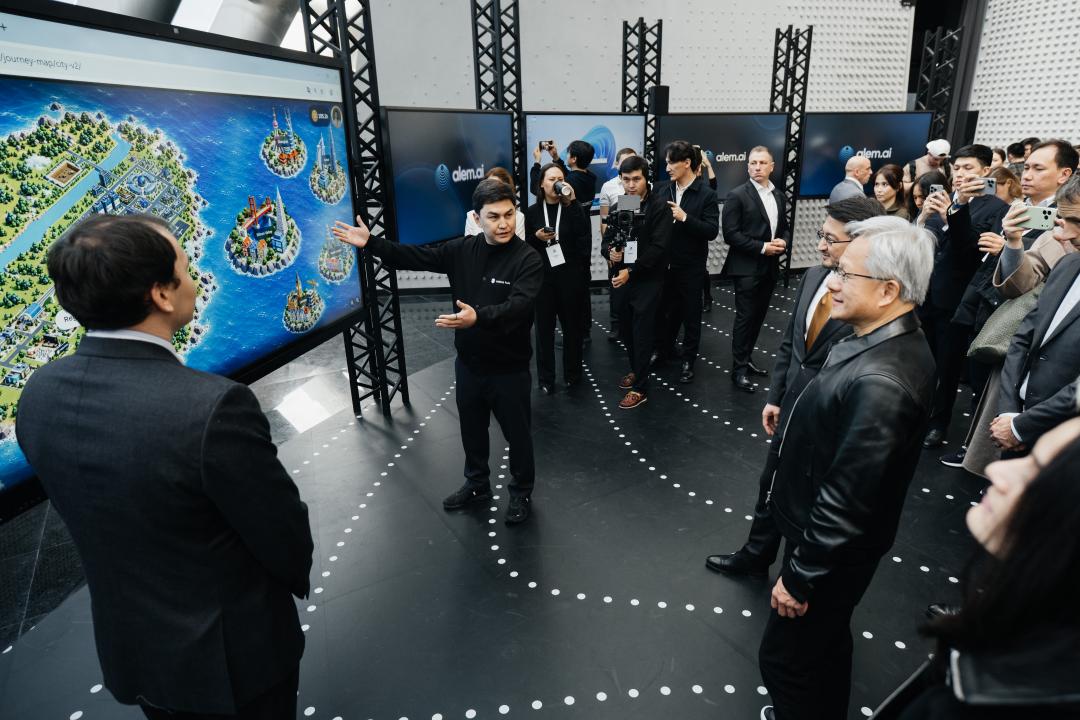
During the visit, Astana Hub CEO Magzhan Madiyev presented Startup City, a digital startup city built around peer-to-peer (P2P) interaction and gamification. The platform brings together regional hubs, educational programs, laboratories, venture capital funding, and international platforms, helping startups progress from an initial idea to global markets. Through an interactive gaming experience, participants can earn virtual coins and use them within the ecosystem, while digital twins represent Astana Hub’s real-world infrastructure. Special attention was also given to opportunities for expanding cooperation between Kazakhstan and NVIDIA.
“Jensen Huang’s visit to alem.ai is an opportunity to unlock new prospects for Kazakhstani technology companies. This is particularly relevant to Physical AI — technologies that combine artificial intelligence with robotics, industry, and infrastructure. Kazakhstani startups are already developing solutions in robotics, autonomous control, and intelligent systems. That is why we are working to create an environment where these teams can access infrastructure, expertise, and international partners to advance their technologies and bring them to global markets,” said Magzhan Madiyev, CEO of Astana Hub.
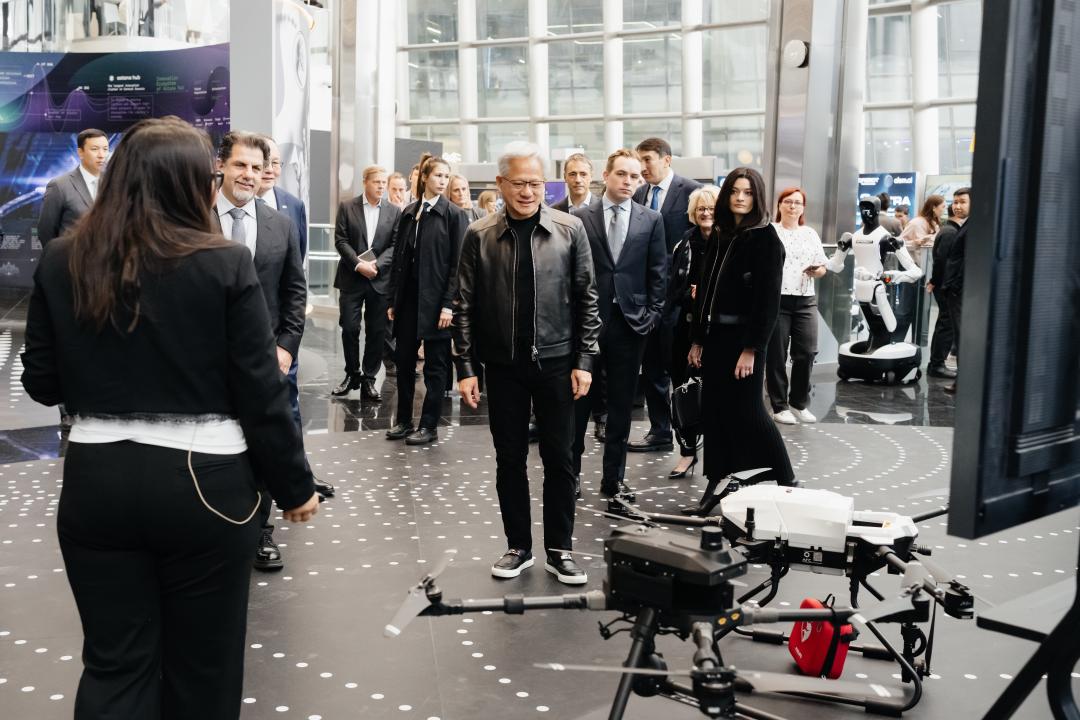
A particular focus of the visit was Kazakhstan’s technology startups. Jensen Huang was introduced to the innovations developed by several companies.
ARC Aero is a technology company specializing in the design and manufacture of its own aircraft, as well as hardware and software solutions for autonomous flight control and real-time operational coordination.
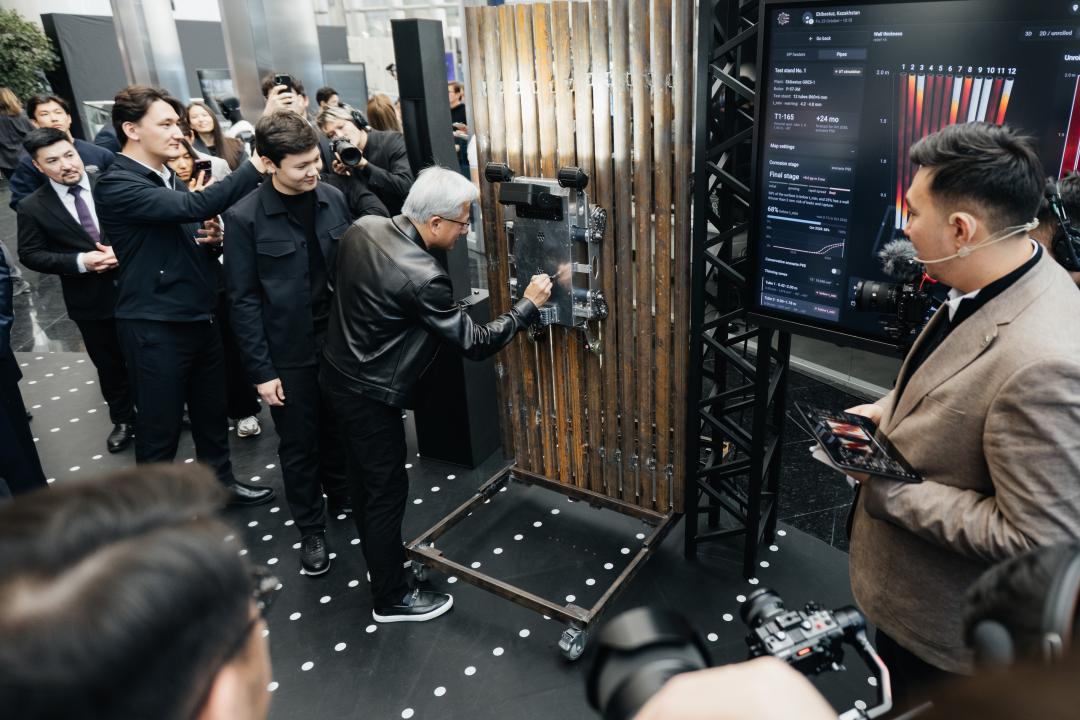
QazTWIN is a Kazakhstani technology platform for intelligent digital twins used in industry, construction, and urban infrastructure. It incorporates robotic crawlers developed by Astana Dynamics to inspect hard-to-reach, confined, and potentially hazardous areas, improving the accuracy of technical diagnostics, inspection safety, and the operational efficiency of engineering systems.
DeepInfra is a technology company providing cloud infrastructure for AI model inference, including large language models (LLMs), generative image and audio models, and multimodal solutions.
MiraiTech is a technology company specializing in intelligent wearable devices and AI-powered solutions for analyzing human movement biomechanics. Its flagship product for athletes monitors physical activity, evaluates performance metrics, and helps optimize athletic results.
Blockchair is a technology company developing blockchain analytics and tools for searching, monitoring, and analyzing transactions across various public blockchain networks.
These projects demonstrated the potential of Kazakhstani technology teams in advancing robotics, autonomous systems, and AI infrastructure.
Another project presented during the visit was Data Center Valley, a large-scale data center cluster being developed in Ekibastuz. The project envisages the phased development of infrastructure with a total power capacity of up to 1 GW, with the first phase’s 215 MW capacity already fully reserved. Data Center Valley is designed to become an international hub for high-performance computing and artificial intelligence, attract multibillion-dollar investments, and create opportunities to host infrastructure for leading global technology companies, including NVIDIA partners and Firebird AI.
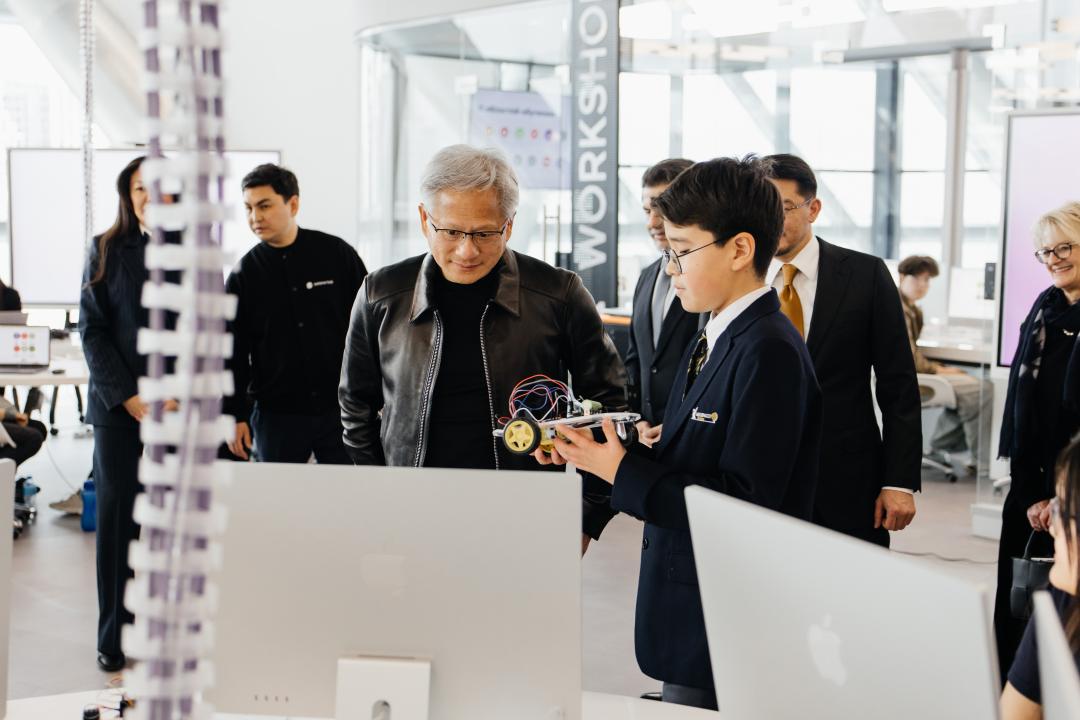
Jensen Huang also met students from TUMO Astana, a creative technologies center where teenagers develop digital skills, learn programming, and explore creative disciplines free of charge through self-directed learning, hands-on workshops, and project laboratories led by industry experts.
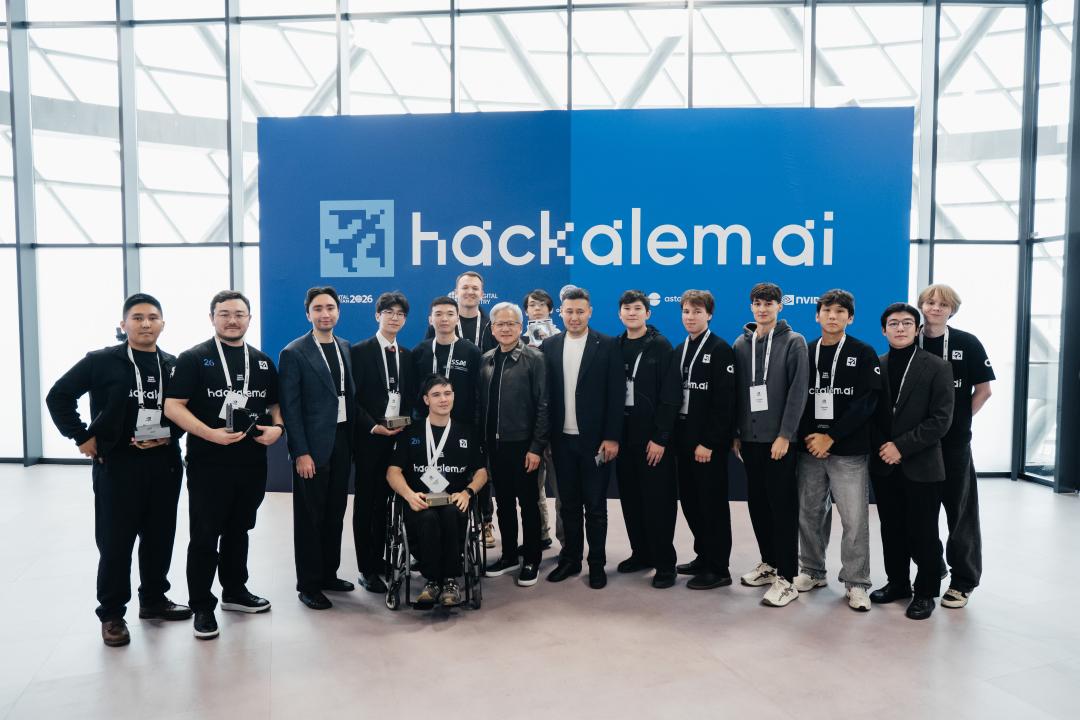
He then met the winners of HackAlem AI, the world’s largest AI hackathon, held with the support of NVIDIA and OpenAI. The event set a GUINNESS WORLD RECORDS™ title for the most participants in an AI hackathon. Jensen Huang joined the winners for a commemorative photograph.
The next part of the program included a meeting with students from Tomorrow School, a free programming and artificial intelligence school based on practice-oriented learning. Jensen Huang was introduced to the school’s educational model, in which students develop programming and AI skills by working on real-world projects.
Sayasat Nurbek, Minister of Science and Higher Education of the Republic of Kazakhstan, also attended the meeting. Jensen Huang learned about the activities of Qazaq AI Research University (QAIRU) and its initiatives to train AI specialists.
During the visit, Jensen Huang met the founders of Higgsfield, Kazakhstan’s first unicorn and an NVIDIA technology partner in generative video, with an audience of 40 million unique users. The platform uses NVIDIA computing technologies to train its proprietary Soul models and develop its agent-based product, Supercomputer 2.0. The parties discussed the future of generative video and the development of Kazakhstan’s technology ecosystem.
Freedom has unveiled City-Scale Physical AI, a project to build digital twins of Almaty and Astana for training and testing autonomous robots in real urban environments. The project will be built on NVIDIA’s Physical AI technologies, which help speed up the development and deployment of autonomous robotic systems.
A key event of the visit will be an exclusive fireside chat between Jensen Huang and Zhaslan Madiyev. The discussion will focus on the future of artificial intelligence and Kazakhstan’s role in the global AI economy, covering topics ranging from energy development and computing infrastructure to sovereign AI and Physical AI — technologies that enable machines to interact with the physical world.
The speakers will discuss how AI is transforming industry, the labor market, and education, what opportunities it creates for the economy and society, and how to prepare the next generation for technological change. Particular attention will be given to developing Kazakhstan’s AI ecosystem, nurturing talent, and creating world-class technologies.
As part of the Year of Digitalization and Artificial Intelligence, Jensen Huang’s visit to alem.ai underscored Kazakhstan’s ambition to secure a significant position in the global AI economy. The combination of institutional support, computing infrastructure, and human capital provides the foundation for the country’s development as an international Physical AI hub — a place where advanced technologies can not only be developed but also tested and applied in real industrial settings.
Jensen Huang’s visit marked the conclusion of AI Month, a series of events dedicated to advancing artificial intelligence in Kazakhstan, supported by Astana Hub and featuring NVIDIA as the general partner. The program began on September 23 with the international HackAlem AI hackathon, which set a GUINNESS WORLD RECORDS™ title for the most participants in an AI hackathon.